Maria had always been diligent about her health. She managed her blood pressure reasonably well, stayed active, and had no history of smoking. One afternoon at work, she suddenly felt an intense wave of dizziness. The room seemed to tilt, and she grabbed her desk to steady herself. A colleague noticed she looked pale and asked if she was okay, but Maria laughed it off, “Just a little vertigo,” she said. After sitting for a few minutes, she tried to stand, but her balance was off. She felt nauseated and began to vomit. Assuming it was something she ate or an inner ear issue, she wanted to go home, but something wasn’t right and her coworker called 911.
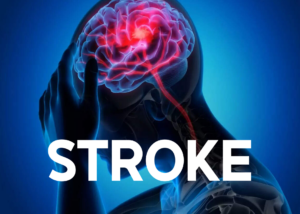
Depending on the part of the brain where a stroke occurs, symptoms may present differently than the hallmark signs we’re taught to recognize and can produce more subtle or unusual symptoms. Stroke symptoms are not always obvious and can be mistaken for less serious conditions like vertigo, migraines, or dehydration which can lead to delays in treatment and more debilitating outcomes.
Common myths or misperceptions about strokes:
Myth #1: Stroke only happens to the elderly – While risk increases with age, strokes occur across the lifespan—even in people in their 30s, 40s, and younger. But as we age, stroke rates certainly rise – they double every 10 years after age 55.
Myth #2: Mini-strokes or TIA’s are not as serious – A temporary blockage of blood flow to the brain is known as a transient ischemic attack (TIA) or ministroke. Because the blockage is temporary, symptoms usually disappear in a short period of time which makes it easy to miss or disregard symptoms which can be a mistake. TIA’s can be a precursor to a stroke – 10% can have a stroke within the first few days following a TIA and up to 25% can have a stroke or major cardiovascular event within 90 days. It’s important to get evaluated.
Myth #3: Stroke risk is unpredictable – While genetic factors can contribute to stroke risk, up to 80% of strokes are preventable by managing our risk factors.
Myth #4: You can treat a stroke by taking aspirin with the first symptom – It is NOT recommended to take an aspirin, a blood thinner to prevent clotting, as not all strokes are the same. Some strokes are caused by blood clots but others can be caused by bleeding in the brain. The only way to decipher this is with a CT scan so instead of reaching for aspirin, reach for the phone to call 911.
Myth #5: Stroke always causes paralysis and is not recoverable – While weakness or paralysis happens in up to 80 percent of people who have a stroke, it’s not a given. Stroke symptoms depend on the area of the brain that is affected and recovery depends on the timeliness of getting treatment. If blood clots are determined to be the cause, treatment is most effective if given in the first 24 hours. This emphasizes the importance of seeking immediate treatment as brain cells begin to die within minutes of oxygen deprivation – every minute counts.
May is Stroke Awareness month, and it reminds us about the importance of understanding your risks and recognizing the warning signs that can make the difference between recovery and lifelong disability. When we learn to recognize the signs of stroke, we become better equipped to serve others in moments of crisis. Acting quickly is more than a medical response; it is an expression of love, compassion, and readiness to help our neighbor. Knowledge can save a life—perhaps the life of someone sitting beside you in worship, at your table, or in your family or community.
Want to learn more about this topic? Join me on May 17 at 11:30 a.m. after worship to learn more about your risks, the warning signs you should look for, and the best way to respond should symptoms arise. Advent Health of Winter Garden Stroke Manager, David Pabon, presents ‘Stroke Awareness: Are you at risk’. Click the link below to learn more about this program and to register.